How to Make a Family Budget That Actually Sticks (2026 Guide)
Most family budgets fail within the first month. Not because families don't care about money — but because the budget was built for a perfect month, and real life never cooperates. The car needs a tyre. A birthday sneaks up. The food shop creeps £40 higher than planned. By week three the spreadsheet feels like a guilt machine, so it quietly gets abandoned.
The fix isn't more discipline. It's a budget built for how families actually spend. Here's the five-step method that sticks.
1. Track before you plan
The biggest budgeting mistake is guessing your numbers. Before you set a single target, spend two weeks simply logging what actually goes out — every subscription, every school payment, every coffee. Most families discover they're underestimating their real spending by 20–30%, which is exactly why their first budget collapses.
You don't need an app with a login and a monthly fee. A simple spreadsheet with an expense log does this perfectly, and your data stays yours.
2. Budget the year, not just the month
Monthly budgets fail because expenses aren't monthly. Car insurance, Christmas, school uniforms, MOT, holidays — these "surprise" costs are entirely predictable, they just don't arrive every month.
List every irregular expense for the year, total it, and divide by 12. That figure goes into your monthly budget as a sinking fund. When the car insurance lands in March, the money is already sitting there. This one habit is the difference between a budget that survives December and one that doesn't.
3. Give every category a target — then compare, don't judge
Set a realistic target for each category: housing, food, transport, kids, fun. Yes, fun — a budget with no entertainment line is a diet of celery, and it ends the same way.
Then each week, compare planned versus actual. Not to feel bad, but to learn. Over three months you'll see your true numbers emerge, and you can adjust targets to match reality rather than wishful thinking.
4. Deal with debt using a payoff date, not a payment
Minimum payments are designed to keep you paying for decades. The psychological shift that changes everything is seeing a debt-free date — an actual month and year when a debt hits zero.
For each debt, work out how many months it takes to clear at your current payment, and what happens if you add even £25 extra. Watching your debt-free date jump closer every time you overpay is genuinely motivating in a way that "pay more towards debt" never is. Families who can see the finish line keep running; families who can't, stop.
5. Make it a 15-minute Sunday habit
A budget isn't a document, it's a habit. Once a week — Sunday evening works for most families — spend 15 minutes logging the week's spending and glancing at the dashboard. That's it. Daily tracking burns people out; monthly tracking lets problems grow for weeks. Weekly is the sweet spot.
Do it with your partner if you have one. Money fights usually come from surprises, and a shared 15-minute review means there are none.
The shortcut: don't build the spreadsheet yourself
Everything above can be built in Excel or Google Sheets — if you enjoy writing formulas and have a free weekend. If you'd rather start budgeting tonight, we've already done the building.
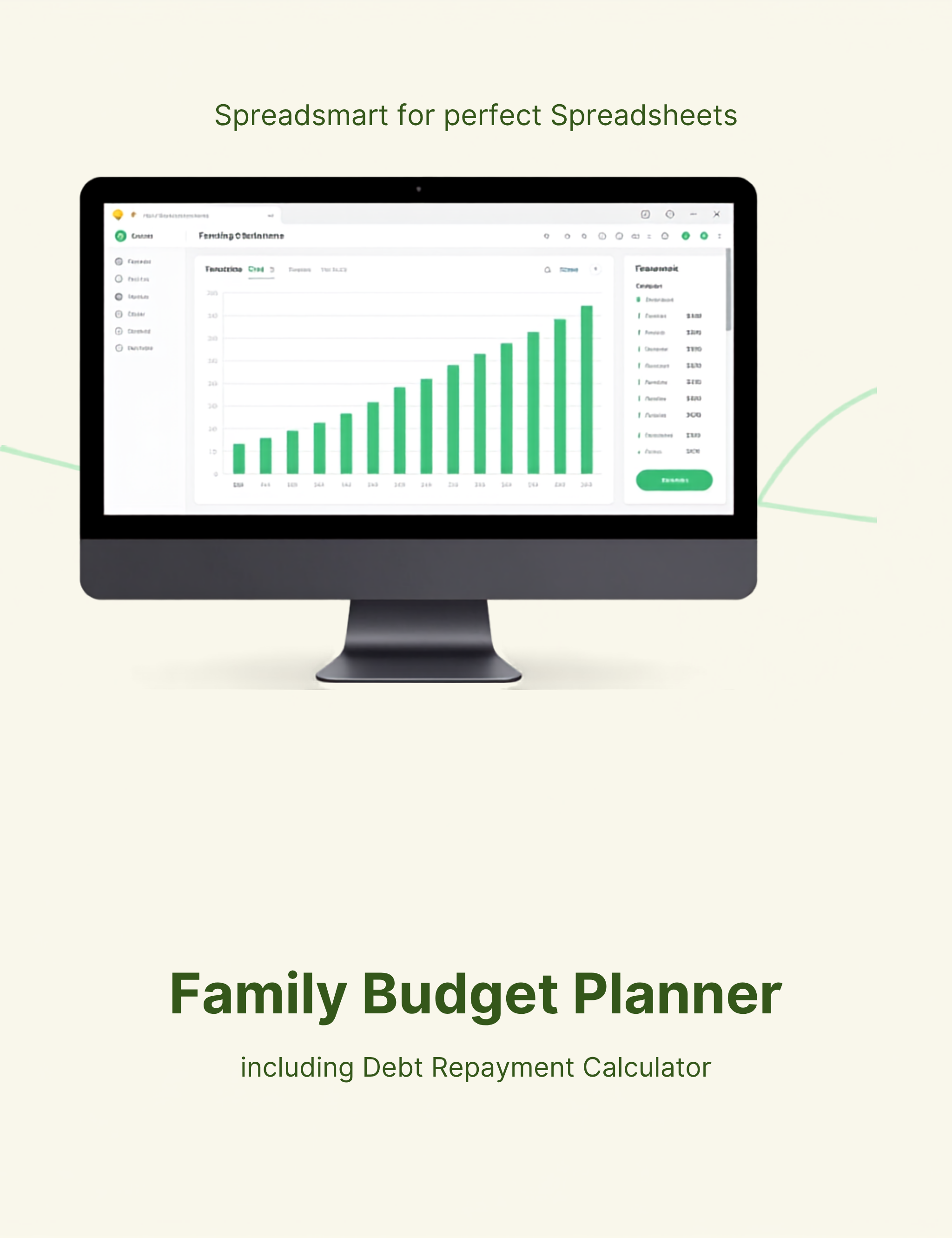
The Family Budget Planner + Debt Payoff Calculator is this entire five-step method in one done-for-you spreadsheet: full-year budget with 9 ready-to-use tabs, income and expense logs, savings goals, bills and subscriptions view — plus the debt tools from step 4. List every debt and instantly see its payoff date, then use the month-by-month payoff schedule to watch your debt-free date move closer every time you pay a little extra.
It works in Excel, Google Sheets and free LibreOffice, and it's an instant download — no subscription, no login, yours forever.
Get the Family Budget Planner + Debt Payoff Calculator →
A planning guide for your household, not financial advice. If you're struggling with problem debt, free help is available from organisations like StepChange and National Debtline in the UK.
-
Posted in
budgeting tips, debt payoff, family budget, money management